





Hiades Business Patterns S.L. Technology company specializing in solutions through its platform ‘AMURA Smartport Ecosystem Solutions‘, spearhead of an innovative project funded by the European Union to create an interoperable data space that will transform the management of maritime-port operations.
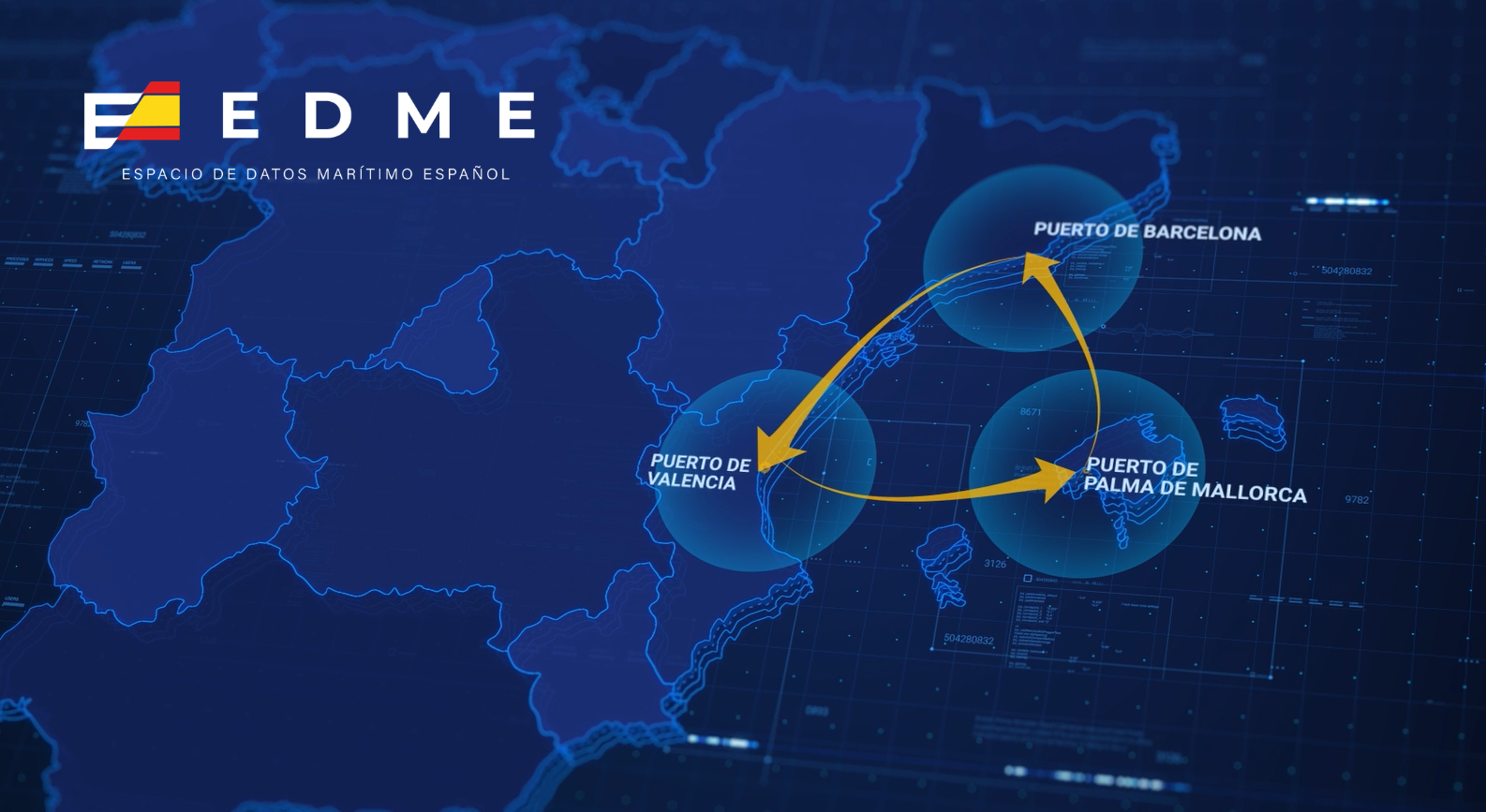
The project, framed in the Recovery, Transformation and Resilience Plan (PRTR) and financed with NextGenerationEU funds, aims to develop a sectoral data ecosystem that improves coordination between logistics actors, increases operational efficiency and promotes environmental sustainability in one of Spain’s busiest maritime corridors: Valencia-Baleares-Barcelona.
Advanced Technology for Smart Ports
The proposed solution consists of a distributed digital platform based on event-oriented architecture (EDA) that will integrate key systems such as:
- Navigation data (AIS, VTS).
- Port systems (PMS, TOS).
- IoT sensors and meteorological data.
<<We are creating a real-time maritime-port data space that will be applied AI and big data to optimize processes and generate substantial savings>>, explains Airam Rodríguez, Advisory Board Member of AMURA.
The system will also allow the exchange of information in real time between logistics operators, port authorities and technical services, establishing a collaborative and traceable environment that will increase operational reliability.
In parallel, advanced tools for planning optimised routes – called ‘green routes’ – will be incorporated to help meet European objectives in terms of decarbonization and sustainability.
All of this is part of a global context where more than 90 % of international trade is carried out by sea, with forecasts pointing to a growth of more than 800 % in the volume of operations by 2050. In the case of Spain, where port activity accounts for around 9 % of GDP, the development of intelligent platforms such as this one is strategic to guarantee logistics competitiveness in the medium and long term. Puertos del Estado, Valenciaport, Ports de Balears and Port de Barcelona, Among others, the project (2025-2026) lays the foundations for a new port interoperability standard, combining local expertise with a global vision to create a model that can be exported to other European logistics nodes.